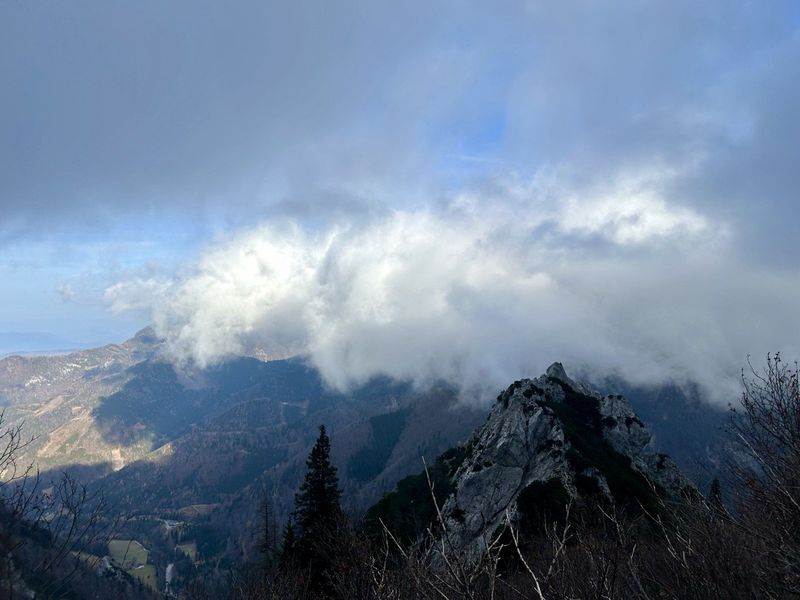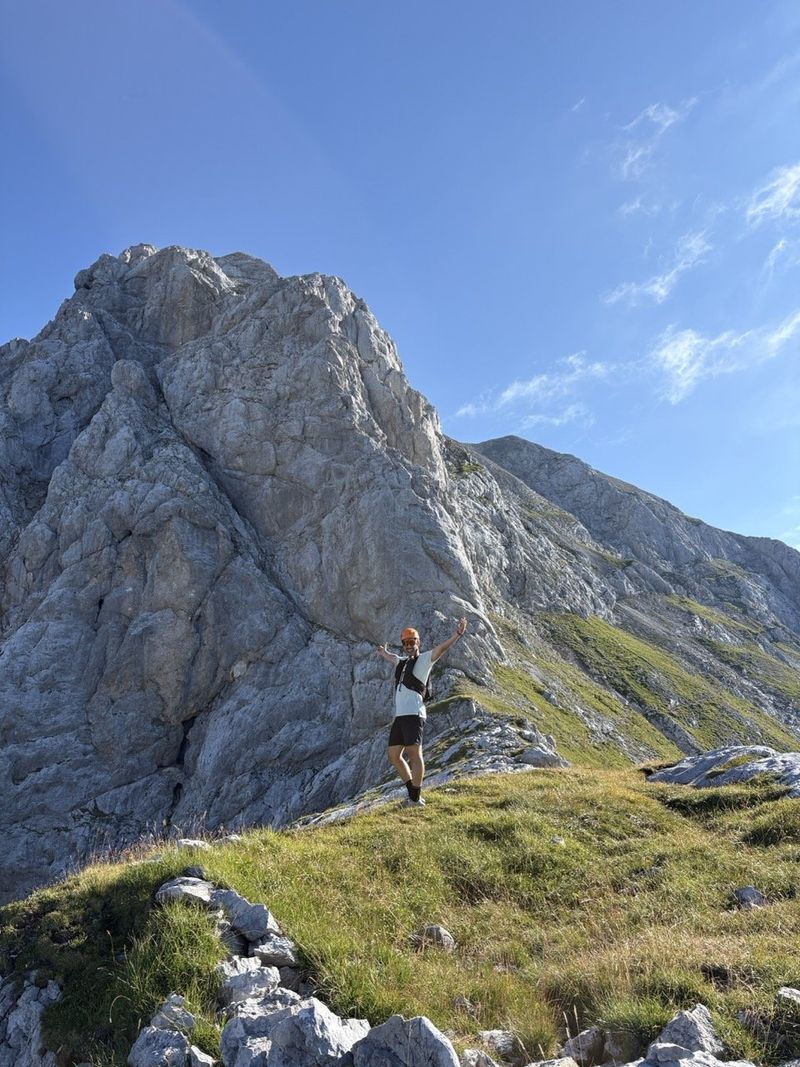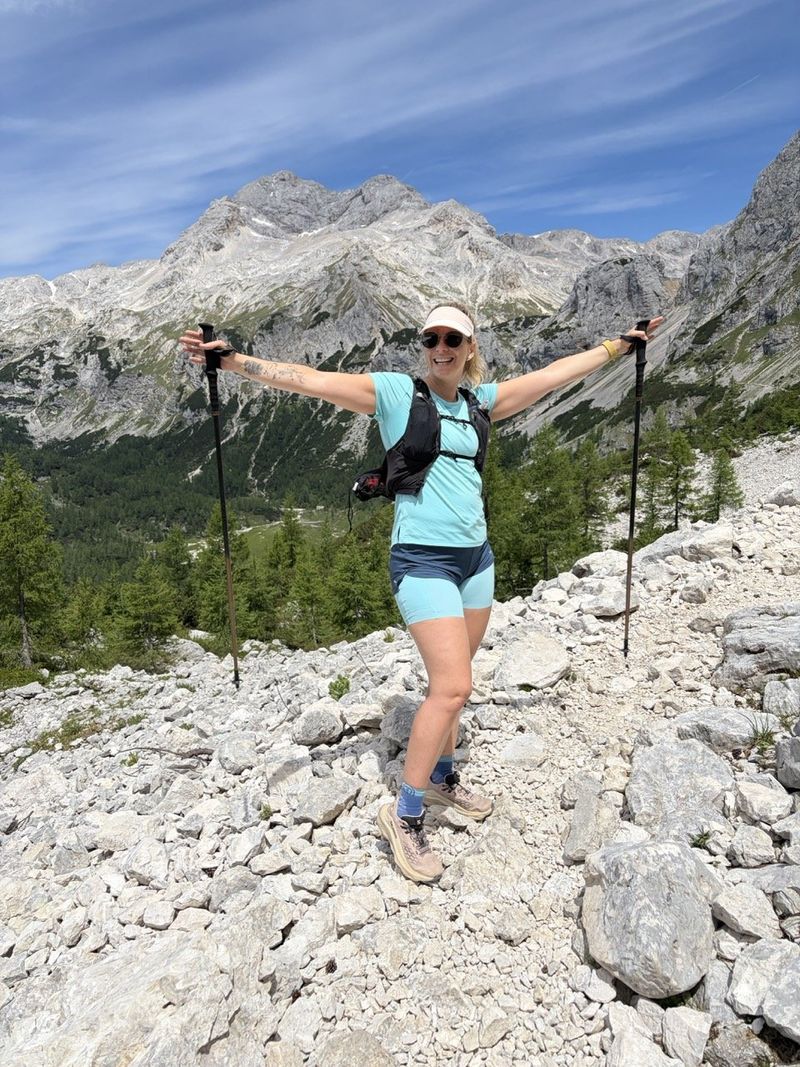
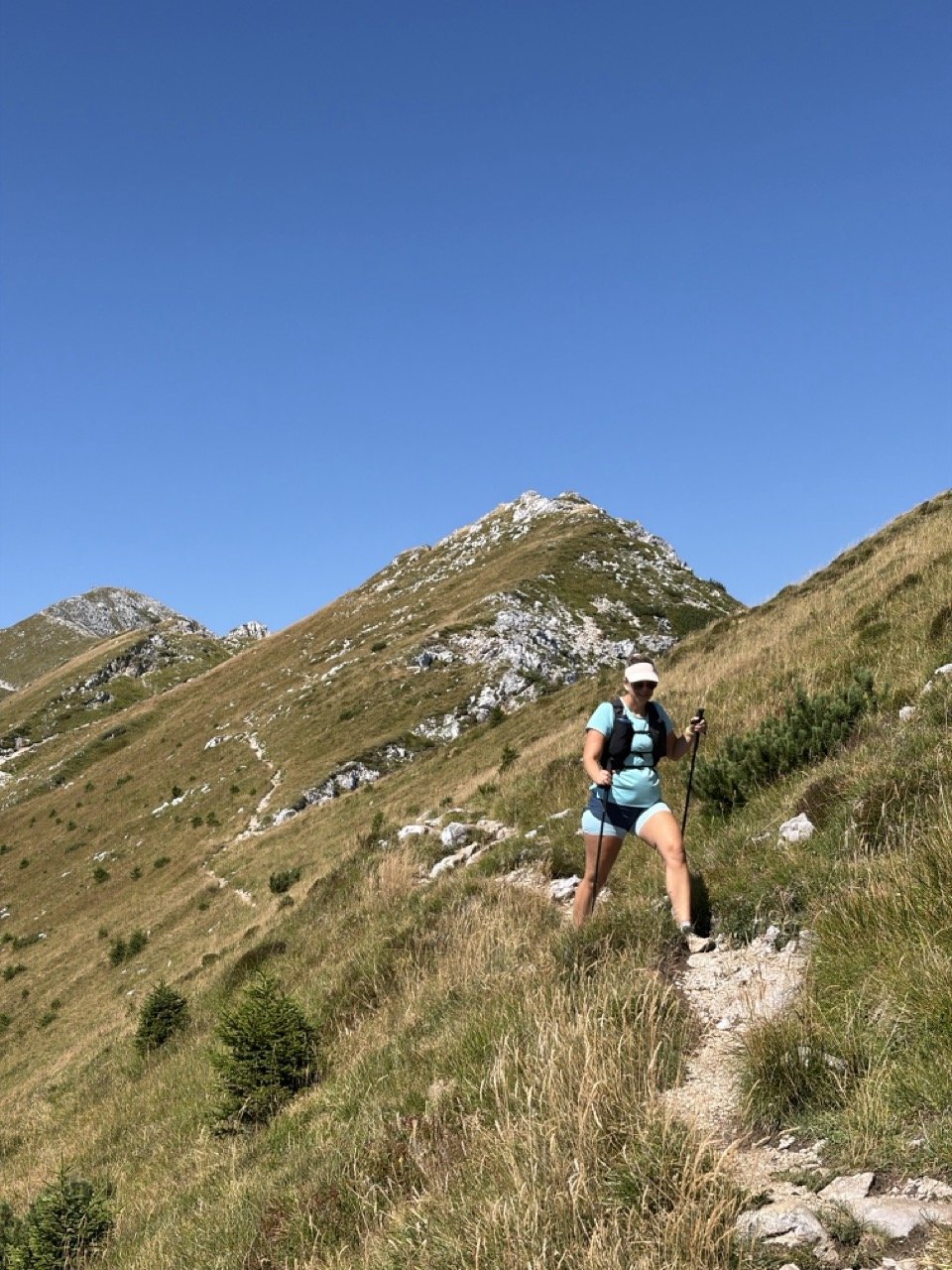
When you hear "trail running", you picture it as running. When you start doing it, it feels closer to hiking than running. So what's the truth? Trail running is an outdoor endurance sport combining elements of running and hiking. Where you can run, you run; where you can't, you hike. When you can't go on, you walk again, and then you run again. In recent years, it has become one of the fastest-growing outdoor activities. The quiet of the forest, stunning mountain views, wildlife along the trail, and pushing your own limits practically beg you to give it a try. It also helps that you have complete freedom over where and how long you run. You can head out to the nearest gravel track, the hill around the corner, traverse the Kamnik-Savinja Alps in one go, run alongside your kids on their bikes, or run to the company picnic in Celje.
Benefits of trail running
Compared to road running, the biggest advantage for me is definitely being out in nature. Compared to hiking, it's that I can do full-day mountain tours in just a few hours. For someone like me, with a family and a job at an American tech startup, that's the ideal combination. On top of that, I don't have to run on paved surfaces, for which my knees and ankles are very grateful. Of course, trail running, like any other physical activity, positively impacts health: it strengthens the cardiovascular system and the muscles. And because of the varied terrain, it also improves coordination and concentration.
History
Maybe not as old as the marathon from ancient Greece, but the history of running in the mountains does go back a long way. The first recorded race dates to the 11th century, when the Scottish king Malcolm Canmore organized a hill race to find himself a fast messenger. In 2003, the first UTMB race was held: 170 kilometers and 10,000 meters of elevation gain around Mont Blanc. Interest in trail running has been growing rapidly ever since. Nowadays, UTMB races all over the globe. The first organized trail race in Slovenia was GM4O in 2002. Since then, the number of organized trail races has grown considerably, and today you can race practically every month of the year.
Gear
The basic kit consists of the following:
- Trail running shoes: It's important to have shoes with an outsole that grips well on mud, wet roots, and slippery rock.
- Running pack: This is where you carry drinks, food, spare clothing, a first-aid kit, and so on.
- Running clothing: In the warm months, that means shorts and a T-shirt; in the cold months, running tights, shirts, mid-layers, jackets, headbands, hats, and gloves, depending on the temperature.
- Trail running socks: Regular socks dry too slowly and lack reinforcement in the spots where friction is greatest. That can lead to unpleasant blisters, chafing, and the like.
- Poles (optional): Poles really come into their own on long distances and long, steep climbs.
What about distances?
Unlike a marathon or half marathon, trail running has no set distance. You can run 10 km, 100 km, 1000 km, or 7 km. What matters is that you’re running, you’re outdoors, and you’re enjoying it. At races, too, you’ll find every possible distance from 10 km upward. If you want to run longer, it’s important to increase the distance gradually. Jumping up too much at once can lead to injuries or to you getting sick of trail running altogether.
One for the road
Trail running only really won me over once I started running in the high mountains. Others fell for it immediately. If you don't know where to start, I suggest reading How to get started with trail running?. And if you've already got it all figured out, find your next route here. If you need advice, you can find me on Instagram.
Hope to see you out there somewhere.